Thursday, December 7, 2017

Advent, day 6. Two Bulls and Two Altars.

Our most familiar and fantastic story of Elijah pits him against 950 prophets of the demon gods, Baal and Asherah. This story is pure legend as we see the stage set for a magical reversal: One triumphs over the masses. Growing up, I pictured it as Elijah's idea: his plan to show the people God in a spectacular way. He issued the challenge, collected the massive audience, and poured roughly 48 gallons of water over a sacrifice which was to be burned, during a drought! "What if God hadn't come through?" I wondered in my childish mind.

Clearly my perspective was skewed by growing up in the 20th C and in a culture of individualism. Elijah was God's man. YHWH wasn't Elijah's God. This was not a prophet-medium-witchdoctor showing what he could conjure spiritual powers to do--which is the basis of all animism. This was a man of integrity aligning himself with whatever God was doing and proceeding to follow orders. Even orders which appeared to be self-sabotage.

Advent day 6, Two Bulls and Two Altars

1 Ki 18:21 “How long will you waver between two opinions? If the LORD is God, follow Him; but if Baal is God, follow him.” But the people said nothing.

The day for war in heaven draws us on—
A prophet-mob advancing on the hill.
Alone I stand to serve the Kingdom come
Midst mindless chatter whilst they vaguely mill.

Let heaven speak and Spirit prove the Right:
Choose you a bull and build your altar frame.
Likewise do I and then contest the fight:
Whose god can immolate with heaven’s flame?

Never did a war more peaceful seem:
No swords or spears or javelins did clash.
Upon two altars bloody pieces gleam
As priests incant and importune, self-slash.

It did appear that Baal was unconcerned,
Or out of town, or slightly indisposed. 
Amused, Elijah took the chance to spurn
Their cries, suggesting that he dozed!

From morn to noon the frenzied prophets wailed,
Then into evening sacrifice, they bled.
Their orgiastic antics truly failed
To gain his favour, now they’re full of dread.

The stage was set for heaven’s grand display—
Pervaded by metallic scent of blood.
Twelve massive water jars poured out a flood
And drenched the altar’s sacrifice array.

Such waste of water in a time of drought!
Elijah followed orders—not his plan.
The brimming altar image conjures doubt
And the lonely prophet stands as God’s own man.

“Let it be known today that You are LORD.
And I your servant ONLY You obey.
Please answer my small prayer with your display:
Let no one doubt the power of Your Word.”

A cataract of fire from heaven fell,
Consumed the sacrifice, the woods, the stones,
The altar, water, soil burned like hell—
Deep foreboding seeped into their bones.

“The LORD is God,” with one loud voice they cried,
Falling prostrate on the ground in fear.
To a man, the prophets that day died:
The war in heaven never felt so near.

A day of tension: holy and unholy.
The victor knew himself that he was lowly.

Advent, day 5. The Troubler and the Troubled.

Being unfairly judged or blamed for what you did not do. It is a painful and shameful sensation in any time and culture.

Elijah was no stranger to false accusations; after three years of drought which he predicted, it was inevitable that it would be seen as his fault. Being sent to stand before Ahab, the king who'd sent spies throughout three lands to find him, could not have been other than daunting. Obadiah, the prophet who was to inform Ahab of Elijah's whereabouts was deeply fearful to undertake that mission. The tension in the court when Elijah was named was surely palpable--a most hunted, wanted man.

Ahab's greeting to Elijah instinctively forced on him the blame of Israel's hardship. But the prophet deflects the false arrow with words of Truth: "you and your family are the troublers of the land." Elijah knew who he was and did not acknowledge a twisted perception. 

Next, without being precisely sure of what would be required of him, Elijah outlined the LORD's demands: to call all of Israel and specifically include the 400 prophets of Asherah and the 450 prophets of Baal, favoured men who ate daily at the king's table while Israel starved. The playing field is being laid out, and it looks very uneven; not in Elijah's favour. 

Elijah's trust, however, is not circumstantial. It is born of something intensely personal.

Advent, day 5. The Troubler and the Troubled.

1 Ki 18: 17 When Ahab saw Elijah, he said to him, “Is that you, you troubler of Israel?”

The famine is severe in all the land—
Three years have worn the people to despair.
Now Jezebel exacts her vengeance harsh
Commanding slaughter of the men of God.

A trusted steward in the royal court
One hundred prophets now has safely hid
In secret caves and given food and drink
To save them from a madness born in hell.

Today the LORD has told me to present
Myself to Ahab with His revelation:
Soon rain will come, but first a confrontation
Of power authentic: setting captives free.

“You troubler of Israel, is that you at last?”
Perversely Ahab shifts the blame away—

“The pain of Israel lies not at my door
I merely bring the words the LORD has said.
Your family are the troublers of this land.
You and your father heartlessly defiled it
By passing children through the demon fires:
A foul, unholy stench rises to heaven.”

Now call the people everywhere to come,
Include the Baal and Asherah prophets vain,
To Carmel where the verdict will be won.
And when it’s finished, I will send the rain.


Wednesday, December 6, 2017

Advent, day 4. The Sin and the Son

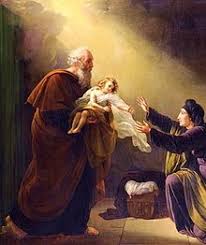
God does not select events or people at random. He is ultimate purpose. So when a humble widow from Zarephath is the chosen saviour of Elijah, we figure there must be more than meets the eye. She and Elijah connect: we expect him to walk comfortably with God's mystery since it's a daily thing with him. Then the woman's only son dies.

Suddenly we confront the invisible spiritual realities of Sidon's daily life. She immediately assumes her son's death is punishment for her sin.  Spirits and demons control the people's mindset: things are caused by the unseen. People die for reasons. She has seen the power of God and knows that He could well be the killer. It seems a leap to us, but it is a logical step to her: a powerful man arrives. Power kills. Her son dies. 

With nothing left to lose, she confronts the man of God and admits that she has sinned. What sin would bring this type of calamity, but a sin against the demons? And since child sacrifice was so common in those days, I have guessed that she avoided sacrificing her son and now believes the spirits are exacting revenge. She cannot yet distinguish between the Love of the Most High and the Envy of the demons. 

So through this painful valley, God will show her Who He is.

Advent, day 4. The Sin and the Son

1 Ki 17:18 What do you have against me, man of God? Did you come to remind me of my sin and kill my son?

I never asked for this—
For life or hope or help.
I’m just a simple woman
looking after son and self.

We opened up our home
Inviting you to stay.
‘Cause after all, man of God,
He listens when you pray.

He’s made this land a waste;
Our gods are shame-defaced.
Because the skies withhold,
Asherah’s hope is cold.
Vineyards, fields, and wombs
Are barren, fruitless tombs.

I was at peace with death,
But you showed up with breath—
I clutched in desperation,
Not sure it was salvation.
Came you to remind
Me that heaven is not blind?
My sin must now be righted
For gods which had been slighted?

Born a gifted boy,
Priests warned that he’d annoy—
Gods are ever jealous
Whenever we’re not zealous.
We honoured them much higher,
But the demons wanted fire.

To burn my son, my soul
Would never more be whole.
Coward, I ran away—
I left my man to pay.
The gods exact the price,
And his life sacrificed.
A widow now I pay
The cost to disobey.

The child, the prophet laid
Before the LORD and prayed,
“Let his life return
And his mother learn.”

The son from death arose,
The mother’s heart reposed.


Monday, December 4, 2017

Advent, day 3. The Jar and the Jug

The drought across Samaria, Israel, and Judah affected everyone, including Elijah. The ripples of sin touch the innocent. God still met his needs, but then allowed them to fade to call him to deeper trust. So he trekked back across the Jordan, towards the Mediterranean through a country where he was a most wanted man. God sent him to a foreigner, not even a faithful Israelite. Then God required him to ask something unreasonable of her: cutting away at her own chance of survival and her son. 

This God of all Comfort seems more the God of Discomfort: Elijah is thirsty, starving, hunted, exhausted and must ask the lowest member of the community for help. In this humiliation the prophet seems to get it, that the comfort of God comes through tribulation.

The Jar and the Jug

1 Ki 17: 14 The jar of flour will not be used up and the jug of oil will not run dry in keeping with the word of the LORD . . .

Elijah:
Brook trickles less each day—
My beard drags in the mud.
I face the scorching sun again
And seek the face of God.

Such silence in the wilderness
Quiet death pervades.
The muted rainbow, desert home
Where I seek out the shade.

This morn I woke before the dawn
And found my brook run dry.
You sent me to this desolation:
Your plan subverted—why?

Widow:
Today I heard their God
Not in my ears,  but deep
Within in my soul—in empty space
Where I am loathe to creep.
A foreign voice of mystery
commanded, beckoned me—
To feed a stranger at his plea.
Starvation madness consumes me.

Elijah:
Today a stranger—most absurd,
I, in a foreign land—
Cursed to thirst by my own word,
I crave to drink this sand.

“Woman, would you kindly bring
a dying prophet water?”

She went without demure 
As if a loving daughter.

“And please, a morsel of dry bread—“
At this she sadly shook her head.

Widow:
Your God lives and your God speaks—
Of this I am aware:
He even knows my lowly place
And that my table’s bare.
I have but flour and oil to make
A small meal, then it’s done.
These twigs will cook the final food
For you, me, and my son.

Elijah:
Don’t be afraid. Do as you planned:
Recall you first heard His command.

Widow:
Today I heard Your God
Ask more than I could give,
Then put in me the courage

To sacrifice and live.

Sunday, December 3, 2017

Advent, day 2. The Ravens and the Brook

After predicting years of drought in Samaria, Elijah is sent eastward across the Jordan to a jagged ravine, Kerith. The name means "cutting away" and certainly large areas of his life were cut away as he lived in deep seclusion. Away from human faces and contact, away from familiar activities, away from the company that misery so loves. Sleeping in a barren rock-land, eating from the beaks of scavenger ravens--birds designated unclean, and drinking from a dwindling stream, Elijah must have had some interesting conversations with God.


1 Ki 17: 4 You will drink from the brook and I have ordered the ravens to feed you there.

On the evil and the good the sun does rise, 
O God of heaven, earth, and skies.
On the just and the unjust You send rain,
But seasons run amok when You refrain.

These people, Lord, are messed up and crazy—
False prophets and gods are making them lazy.
Now drought is encroaching, the dust is a test;
Must the few good suffer from thirst with the rest?

Away from the city where I’d be in danger
You send me to Kerith where I am no stranger
With hyrax and foxes and rabbits replete
And ravens who bring me my bread and my meat.

Morning and evening, these bird so intelligent
Bring meals for this prophet’s courage and nourishment 
Small black-winged angels—faithful to mission:
Daily display Your abundant provision.

I long for Your refreshing shower;
But to withhold is in Your power.

Saturday, December 2, 2017

Advent 2018, a study in Elijah, day one.

A year of inner words and silence it has been since my last post on 1 January.

But this Advent has challenged me in a new way: Advent has always meant arrival, appearance, anticipation for me. Looking ahead to something coming. Which is odd. In fact, we are looking back at a past arrival and remembering it, imagining and reinventing its coming, but in our own eyes and age. I lose the perspective of what it must have been like not to know the New Testament's "wrap" of the Old Testament's build-up.

This Advent I am returning to the prophet who was to reappear before that First Advent. Elijah. 

The final verses of the last book of the Old Testament:

"See, I will send you the prophet Elijah before that great and dreadful day of the LORD comes. He will turn the hearts of the fathers to their children, and the hearts of the children to their fathers; or else I will come and strike the land with a curse." 

Then four hundred "silent" years go by and we flip a few pages in our Bibles and read about the angel talking to Zechariah burning incense in the temple. The angel says of a son promised to him and his barren wife, Elizabeth:

"Many of the people of Israel will he bring back to the Lord their God. And he will go on before the Lord, in the spirit and the power of Elijah, to turn the hearts of the fathers to their children and the disobedient to the wisdom of the righteous--to make ready a people prepared for the Lord."

Elijah we know as a wild and crazy prophet; some of our best known Bible stories are about him. But he was genuinely seeking Advent. The Promise had not yet come. The nations were not yet blessed. And fathers' hearts were not turned to their children. 

Welcome. Each day will offer a poem attempting to peer into the life, heart, and soul of Elijah and the people he encountered. Where were the rays of hope in his tumultuous career?


Day One: The Rain and Dew

1 Ki 17: 1  "As the LORD, the God of Israel lives, whom I serve, there will be neither dew nor rain in the next few years except at my word."

The calling of a prophet is not lightly undertaken
When the land is rife with chaos and despair;
When the people sit in darkness, for by Light they are forsaken,
When the weight of spirit-worship fills the air—

The hand of God is heavy when He calls His man to speak
The words the people still refuse to hear:
God makes the message plain through the upright and the meek
That His anger is again their cause to fear.

The man of God is broken by what breaks the heart of God:
Demon-idols crushing souls of men like stone.
Lives and bodies shattered by malicious, deadly fraud:
Prosperity, security, and home.

When the king is on his throne and the prophet stands before,
And the message is of emptiness and drought—
The only thing that holds the holy man within that door
Is knowing disobedience lies without.

Before the king the Tishbite stands
And foretells drought throughout the land. 


Sunday, January 1, 2017

Rachel in Ramah

This morning in church one of the readings (it was Holy Innocents Day) was about Rachel weeping in Ramah for her children because they are not. I've heard that thousands of times. But tears sprang up thinking about Rachel. In previous years I've contemplated what it was like on the Flight into Egypt, how Mary managed in a hurried, night-time, desperate escape into refugee status. But Rachel's story is a sidebar to the Main Event.


She had no idea of her role in the coming of the Saviour of the world. Her children and family were collateral damage. What about this unsuspecting mother, Rachel and her children? She had two under the age of two--she wept for her CHILDREN. They must have been both little boys. Maybe they were twins. But she lost them both. Brutally. I couldn't think about that: but clearly it wasn't in a sterile hospital with kind nurses and people being sympathetic and understanding. No. Most likely it was in her home or outside her front door. Fast. Merciless. Some present day Syrian mothers would no doubt have a clearer picture than I.

Rachel is my new picture for collateral damage. And many times collateral damage doesn't realise what was going on--the purpose--the Big Design--the "reason" if there can ever be a reason for babies to die. There is One who collects all our tears in a bottle. The tears shed over the loss of babies must be of tsunami proportions in a bottle all of their own.

I plan to carry Rachel's tears with me into this year and meditate on them. Her broken heart, how was it to carry on, and did time ever heal that heart? There must have been a two year gap of little boys in the whole neighbourhood of Bethlehem ever after: no Bar Mitzvahs for those two years. All those mothers must have been strength for each other in occupied territory. Rachel: two identical verses about her: one in Jeremiah, the other in Matthew. Weeping and loud lamentation. And she refused to be comforted.

Blessed are they that mourn for they shall be comforted.