Monday, December 11, 2017

Advent, day 10. The Broom Tree and the Bread.

After the spectacle and drama of victory in the LORD, the prophet begins to "come down from the mountaintop" figuratively. And his exhaustion weighs on him. His emotions reflect his physical condition. Depression is likely if someone does not take things in hand. Sometimes we don't have the wherewithal in ourselves. Sometimes we simply do not care any more.

Being used by the LORD is encouraging on many levels, but can cause our thinking to be hazy. Being with the LORD surpasses being useful to Him, and in the end, if we are not with Him, we become less useful. Thus Elijah's interesting restorative process is good for us to take to heart. God isn't finished until He's finished.

Advent, day 10. The Broom Tree and the Bread.

1 Ki 19:4b-5 “I have had enough, LORD,” he said. “Take my life. I am no better than my ancestors.” Then he lay down under a tree and fell asleep.

“It’s the waiting—the not knowing—and the wondering if You’re there.
It’s uncertainty that suffocates my breath.
Beneath a curséd broom tree, I cannot feel Your care,
And the desert is encroaching with my death.”

The prophet left his servant going deep in isolation,
Sheer exhaustion ripped his desperate soul apart.
What he never had expected was from God this separation—
Fuelling self-recrimination in his heart.

Distorting shame within him flamed, vicious and intense.
By hope forsaken, faith now shaken; despair’s in residence.
First he faces, then embraces his mortality:
Praying death with every breath, he sleeps beneath the tree.

Healing sleep is ever deep and soothes the wounded soul.
Angel-bakers brought him bread and water in a jar,
Touched his shoulder, made him bolder—helping him be whole.
He ate and drank, then slept again: next journey would be far.

Again the baker-angel wakes the prophet of the LORD.
“Come drink the water, eat the still-warm bread:”
Preparing for the training that his soul may be restored
Then forty days into the wasteland led.

Sunday, December 10, 2017

Advent, day 9. The Prophet and the Queen.

Familiar are the sermons about Elijah which marvel that after such a power encounter atop Mt Carmel, Elijah could fear for his life from a vicious, God-hating queen. How could a man used so mightily by God then suspect God of letting him down?

What is this thing we call faith? Here the holy tension comes into play. Faith is a gift from God. No one would argue that Elijah was a man of weak faith, yet he wavered in his certainty. He knew the prophets of God were in the crosshairs and perhaps saw his work as over. The Mt Carmel victory would be a grand culmination to a miraculous career.

The very man who stood up to the king, demanded the attendance of 950 false prophets, and then supervised their massacre could by his very awareness of God's character, know that with the unknowable God his life was not guaranteed. He, Elijah, was not the author and he wasn't planning the timeline. 

Lord, help me keep in mind that my lifeline is written by Your Hand and help me be good with that.


The Prophet and the Queen.

1 Ki 19:3 Elijah was afraid and ran for his life.

Elijah knew his end was near, commanded by the queen.
Jezebel was adamant he not escape the scene.
With   heart  afraid and body weak, he sought elusive peace.
But nature-driven  and instinct-led, he sensed his faith release
His grip on hope; thus he ran to far and lonely places—
Through two kingdoms to Beersheba for safety from their faces.
One hundred fifty miles of running reinforced his strife—
Out in the desert, exhausted and low, he wearied of his life.

Advent, day 8. The Cloud and the Rain.

In the midst of all the tension of the heavenly war and the massacre of 950 men, which must have been a sure recipe for PTSD, there is a strangely calm interlude. Elijah waiting for the rain. He predicted the drought would end when the contest of the gods was over. But the sky was clear and bright. Whether he wondered about God's timing--which is a very constant issue in our century--we are not told. He simply kept sending his servant to check on the weather. The Mediterranean was easily visible from the mountaintop. Remember, breaking the drought was not Elijah's prayer; he was not awaiting an answer. Now he was verifying his own reception.

In this poem, I inserted a little of my own self-doubt: "O God, have I misread Your plan?" I don't know if Elijah had that thought or if he confidently persisted in spite of evidence to the contrary. He was definitely more sure of God than many of us are or hope to be. And the comic relief is palpable when the small cloud rises and he tucks his cloak into his belt and runs approximately a marathon distance and beats the king's own chariot.


Advent, day 8. The Cloud and the Rain.

1 Ki 18: The power of the LORD came upon Elijah and, tucking his cloak into his belt, he ran . . .


Elijah claimed the drought would break—
Then hell broke loose in the heavenly war—
And the priests of Baal lost all they’d staked:
The slaughter of them ran a river of gore.

Elijah told Ahab, “Go eat and drink,
For there is the sound of a heavy rain.”
Off in his chariot, quick as a wink,
While Elijah climbed the mount again.


With his face to the ground, down on his knee,
He waited and trusted, not sure of the plan.
Sent off his helper, “Go look toward the sea.”
But nothing was there, said the mystified man.

Go back, go back, go back again.
He told the servant seven times.
“Oh God have I misread Your plan?”
Lo, on the seventh, there was a sign:

The hand-sized cloud was the proof he felt
That the LORD was sending rain.
He tucked up his cloak into his belt
And he ran down Jezreel’s Plain.

The clouds bunched up like thick black cords
And Elijah was engulfed by the power of the LORD.
The deluge mired into such a muck
Is it any wonder if a chariot stuck?

For twenty-five miles, like a bird on the wing

The prophet afoot beat the chariot-king.

Saturday, December 9, 2017

Advent, day 7. The Altar and the Sacrifice

A quick 21st Century observation of this altar story is: before you can use anything others have used, you usually have to repair it.

It's easy to pass over in the script that Elijah had to first repair the altar of the LORD before he could kill or prepare the sacrifice. The prophets of Baal had a functional altar on that hill, but the LORD's altar had been reduced to ruins. Elijah symbolically continues the pattern for altars established by Joshua when the Israelis crossed the Jordan into the Promised Land. At that time, twelve stones were taken from the middle of the river bed and brought to the new land and a memorial to the LORD was built to remind themselves of the LORD's guidance.

Elijah reminds them that the twelve stones signify the tribes which were delivered from Egypt, the sons of Jacob. He reminds them that Jacob received God's promise when his name was changed to Israel. The promise first arrived in a dream about ladders reaching to heaven years previous to his name change. When that promise came, Jacob's response was a "If God will be with me . . . and watch over me . . .and will give me food . . . and clothes . . . so that I return safely . . .then the LORD will be my God." (Genesis 28:20) Jacob's accepting the promise of blessing was very conditional. His return journey was not that of a sceptical young man, but a man hardened by cheating others and being cheated. This time he spends the night in a wrestling match with God and his name becomes Israel: "wrestles with God." That wilderness-abraded man fathers the men who father the tribes represented by those very stones. A long and meaningful legacy for an altar.

Building an altar with specific requirements (12 stones) take more time than just throwing one together with materials at hand. When you have to do it yourself, you take time to reflect on who you are, what you are doing, and why you are doing it. Elijah, reflecting on his own wrestling with God, had time to ponder this business of being God's mouthpiece--the bringer of unwelcome messages. He surely recalled Samuel's stern words to Saul: "To obey is better than sacrifice . . ." and wondered if this process was going to have any impact. 


Advent, day 7. The Altar and the Sacrifice.

1 Ki 18: 30 They came to him and he repaired the altar of the LORD, which was in ruins . . .

Before a sacrifice is made, an altar must be built:
A solid structure which endures like stone.
It’s premature to kill the lamb and let its blood be spilt
If there’s no place to rest the flesh and bone.

The altar of the Most High God which stood upon this height
Was by the fearful pagan priests destroyed.
They scattered stones maliciously to cover-up the site—
Assuming thus its power would be void.

Now years have passed and once again the Holy takes the hill—
Restore the stones that once Your altar formed!
Alone I work to realign; Your vision to instil,
Return to rightful place each stone out torn.

A sacrifice is just a gift until there is an altar
On which to sanctify the living thing.
I muscle every stone in place, my energy won’t falter,
And search my soul to find my offering.

My heart becomes the altar as I reach a place of rest

Your love will kindle it to flame—I sacrifice the best.

Thursday, December 7, 2017

Advent, day 6. Two Bulls and Two Altars.

Our most familiar and fantastic story of Elijah pits him against 950 prophets of the demon gods, Baal and Asherah. This story is pure legend as we see the stage set for a magical reversal: One triumphs over the masses. Growing up, I pictured it as Elijah's idea: his plan to show the people God in a spectacular way. He issued the challenge, collected the massive audience, and poured roughly 48 gallons of water over a sacrifice which was to be burned, during a drought! "What if God hadn't come through?" I wondered in my childish mind.

Clearly my perspective was skewed by growing up in the 20th C and in a culture of individualism. Elijah was God's man. YHWH wasn't Elijah's God. This was not a prophet-medium-witchdoctor showing what he could conjure spiritual powers to do--which is the basis of all animism. This was a man of integrity aligning himself with whatever God was doing and proceeding to follow orders. Even orders which appeared to be self-sabotage.

Advent day 6, Two Bulls and Two Altars

1 Ki 18:21 “How long will you waver between two opinions? If the LORD is God, follow Him; but if Baal is God, follow him.” But the people said nothing.

The day for war in heaven draws us on—
A prophet-mob advancing on the hill.
Alone I stand to serve the Kingdom come
Midst mindless chatter whilst they vaguely mill.

Let heaven speak and Spirit prove the Right:
Choose you a bull and build your altar frame.
Likewise do I and then contest the fight:
Whose god can immolate with heaven’s flame?

Never did a war more peaceful seem:
No swords or spears or javelins did clash.
Upon two altars bloody pieces gleam
As priests incant and importune, self-slash.

It did appear that Baal was unconcerned,
Or out of town, or slightly indisposed. 
Amused, Elijah took the chance to spurn
Their cries, suggesting that he dozed!

From morn to noon the frenzied prophets wailed,
Then into evening sacrifice, they bled.
Their orgiastic antics truly failed
To gain his favour, now they’re full of dread.

The stage was set for heaven’s grand display—
Pervaded by metallic scent of blood.
Twelve massive water jars poured out a flood
And drenched the altar’s sacrifice array.

Such waste of water in a time of drought!
Elijah followed orders—not his plan.
The brimming altar image conjures doubt
And the lonely prophet stands as God’s own man.

“Let it be known today that You are LORD.
And I your servant ONLY You obey.
Please answer my small prayer with your display:
Let no one doubt the power of Your Word.”

A cataract of fire from heaven fell,
Consumed the sacrifice, the woods, the stones,
The altar, water, soil burned like hell—
Deep foreboding seeped into their bones.

“The LORD is God,” with one loud voice they cried,
Falling prostrate on the ground in fear.
To a man, the prophets that day died:
The war in heaven never felt so near.

A day of tension: holy and unholy.
The victor knew himself that he was lowly.

Advent, day 5. The Troubler and the Troubled.

Being unfairly judged or blamed for what you did not do. It is a painful and shameful sensation in any time and culture.

Elijah was no stranger to false accusations; after three years of drought which he predicted, it was inevitable that it would be seen as his fault. Being sent to stand before Ahab, the king who'd sent spies throughout three lands to find him, could not have been other than daunting. Obadiah, the prophet who was to inform Ahab of Elijah's whereabouts was deeply fearful to undertake that mission. The tension in the court when Elijah was named was surely palpable--a most hunted, wanted man.

Ahab's greeting to Elijah instinctively forced on him the blame of Israel's hardship. But the prophet deflects the false arrow with words of Truth: "you and your family are the troublers of the land." Elijah knew who he was and did not acknowledge a twisted perception. 

Next, without being precisely sure of what would be required of him, Elijah outlined the LORD's demands: to call all of Israel and specifically include the 400 prophets of Asherah and the 450 prophets of Baal, favoured men who ate daily at the king's table while Israel starved. The playing field is being laid out, and it looks very uneven; not in Elijah's favour. 

Elijah's trust, however, is not circumstantial. It is born of something intensely personal.

Advent, day 5. The Troubler and the Troubled.

1 Ki 18: 17 When Ahab saw Elijah, he said to him, “Is that you, you troubler of Israel?”

The famine is severe in all the land—
Three years have worn the people to despair.
Now Jezebel exacts her vengeance harsh
Commanding slaughter of the men of God.

A trusted steward in the royal court
One hundred prophets now has safely hid
In secret caves and given food and drink
To save them from a madness born in hell.

Today the LORD has told me to present
Myself to Ahab with His revelation:
Soon rain will come, but first a confrontation
Of power authentic: setting captives free.

“You troubler of Israel, is that you at last?”
Perversely Ahab shifts the blame away—

“The pain of Israel lies not at my door
I merely bring the words the LORD has said.
Your family are the troublers of this land.
You and your father heartlessly defiled it
By passing children through the demon fires:
A foul, unholy stench rises to heaven.”

Now call the people everywhere to come,
Include the Baal and Asherah prophets vain,
To Carmel where the verdict will be won.
And when it’s finished, I will send the rain.


Wednesday, December 6, 2017

Advent, day 4. The Sin and the Son

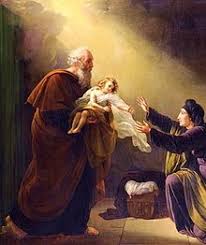
God does not select events or people at random. He is ultimate purpose. So when a humble widow from Zarephath is the chosen saviour of Elijah, we figure there must be more than meets the eye. She and Elijah connect: we expect him to walk comfortably with God's mystery since it's a daily thing with him. Then the woman's only son dies.

Suddenly we confront the invisible spiritual realities of Sidon's daily life. She immediately assumes her son's death is punishment for her sin.  Spirits and demons control the people's mindset: things are caused by the unseen. People die for reasons. She has seen the power of God and knows that He could well be the killer. It seems a leap to us, but it is a logical step to her: a powerful man arrives. Power kills. Her son dies. 

With nothing left to lose, she confronts the man of God and admits that she has sinned. What sin would bring this type of calamity, but a sin against the demons? And since child sacrifice was so common in those days, I have guessed that she avoided sacrificing her son and now believes the spirits are exacting revenge. She cannot yet distinguish between the Love of the Most High and the Envy of the demons. 

So through this painful valley, God will show her Who He is.

Advent, day 4. The Sin and the Son

1 Ki 17:18 What do you have against me, man of God? Did you come to remind me of my sin and kill my son?

I never asked for this—
For life or hope or help.
I’m just a simple woman
looking after son and self.

We opened up our home
Inviting you to stay.
‘Cause after all, man of God,
He listens when you pray.

He’s made this land a waste;
Our gods are shame-defaced.
Because the skies withhold,
Asherah’s hope is cold.
Vineyards, fields, and wombs
Are barren, fruitless tombs.

I was at peace with death,
But you showed up with breath—
I clutched in desperation,
Not sure it was salvation.
Came you to remind
Me that heaven is not blind?
My sin must now be righted
For gods which had been slighted?

Born a gifted boy,
Priests warned that he’d annoy—
Gods are ever jealous
Whenever we’re not zealous.
We honoured them much higher,
But the demons wanted fire.

To burn my son, my soul
Would never more be whole.
Coward, I ran away—
I left my man to pay.
The gods exact the price,
And his life sacrificed.
A widow now I pay
The cost to disobey.

The child, the prophet laid
Before the LORD and prayed,
“Let his life return
And his mother learn.”

The son from death arose,
The mother’s heart reposed.